Income Gains in Florida Help but Dont’t Fully Offset Increased Cost of Housing
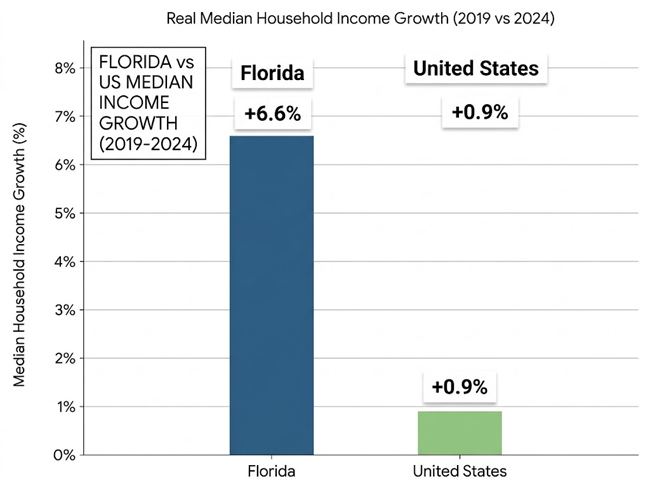
Florida’s wage growth has outpaced the national average in recent years
For many Floridians, household incomes have been moving along and becoming more competitive with other parts of the nation, particularly for leading sectors including professional and business services, technology and healthcare.
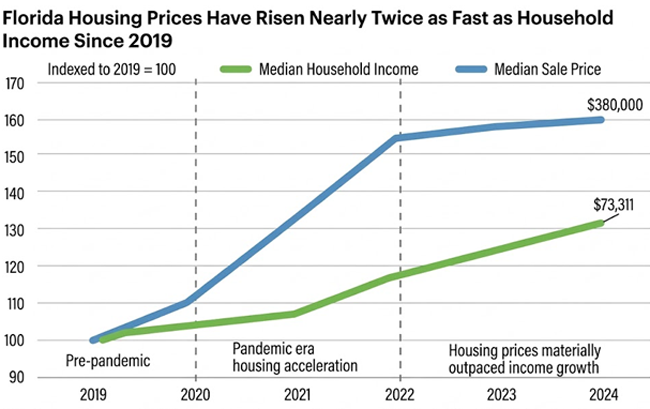
For people purchasing in recent years, these wages have not kept pace with the median sale prices, which have risen nearly twice as fast as household incomes since 2019.
The Migration of Wealth: The pandemic shift to remote work brought a flood of buyers from high-cost states. Armed with out-of-state salaries and coastal home equity, they easily outbid locals and permanently raised the price floor for Florida real estate.
The Math Gap: Since 2019, Florida home values have surged by nearly 56%, while median household incomes grew by less than 29%. Because housing costs rose twice as fast as wages, local purchasing power has actively eroded.
Hidden Carrying Costs: The sticker price of a home is only part of the problem. Property insurance premiums and higher mortgage interest rates have pushed monthly carrying costs out of reach for much of the homegrown workforce.
Source: U.S. Census Bureau / Florida REALTORS
Mortgage Rates
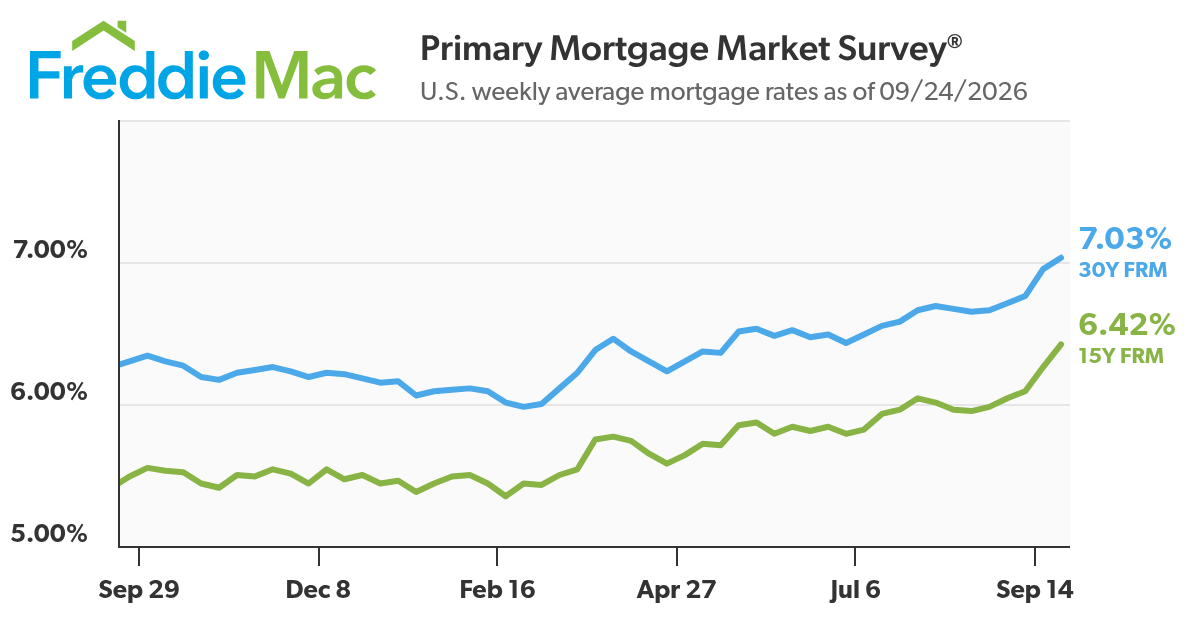
Average 7.03%
The housing market remains supported by a solid labor market and an economy that is growing at a healthy rate.
The 30-year fixed-rate mortgage averaged 7.03% as of September 24, 2026, up from last week when it averaged 6.95%. A year ago at this time, the 30-year FRM averaged 6.30%.
The 15-year fixed-rate mortgage averaged 6.42%, up from last week when it averaged 6.26%. A year ago at this time, the 15-year FRM averaged 5.49%.