Last Thursday (9/10/2026), the average 30-year fixed mortgage rate hit 7.07%
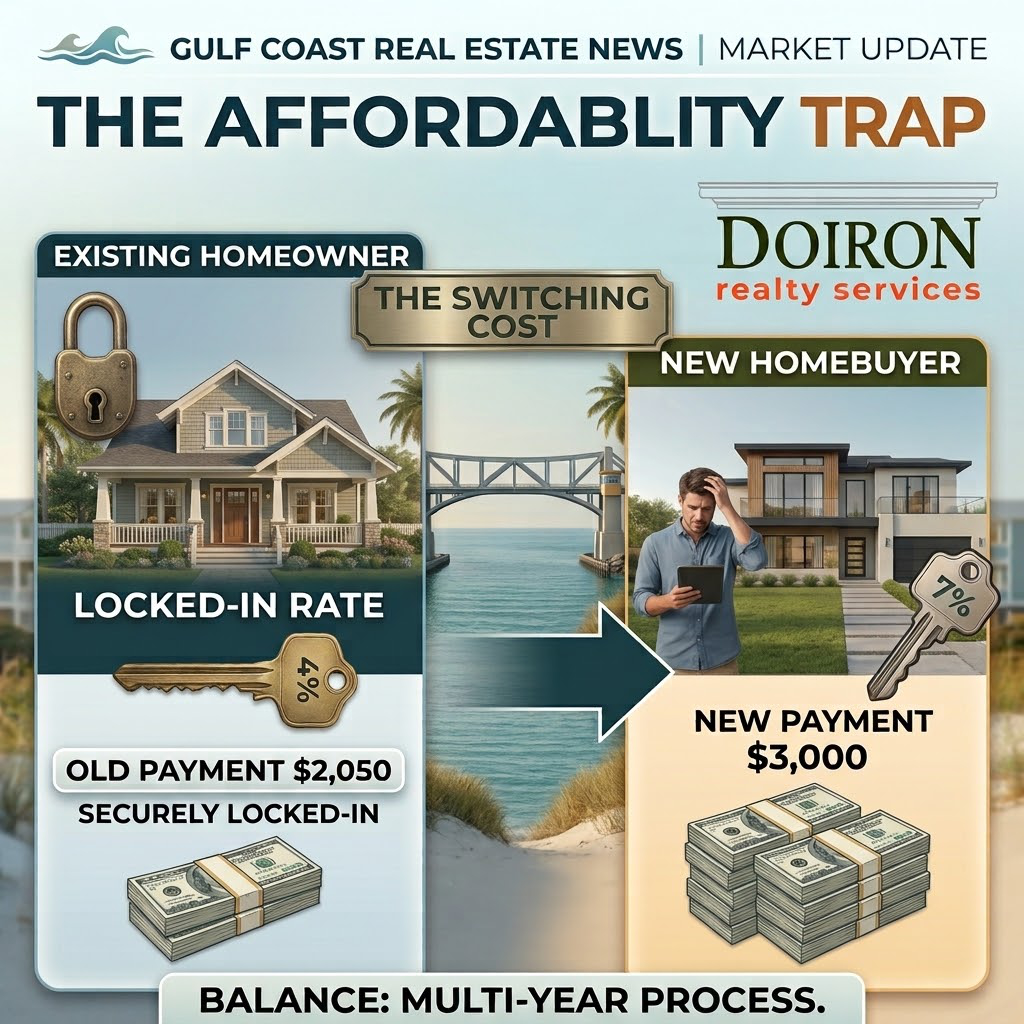
This is the first time the rate has gone over 7% since May 2025. However, the “market rate” isn’t what most current homeowners are paying. The current average rate on all outstanding U.S. mortgages is 4.4%. While that average existing homeowner rate is slowly increasing, it will take time to balance out. Most homeowners locked their rates in years ago, yet the average rate only rises as older and cheaper loans get paid off, sold, or refinanced.
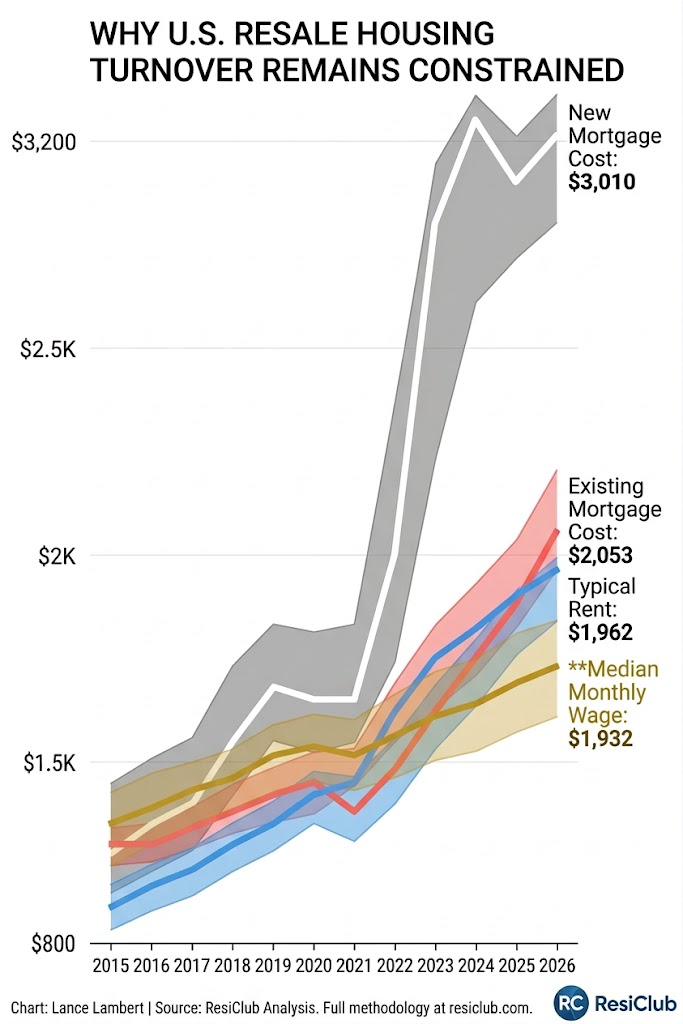
Totaling up current market mortgage rates, property taxes, insurance, and home prices, a homebuyer today would be paying approximately $3,000 a month on a typically priced home, with the assumption of a 10% down payment. That’s roughly $950 more than the typical $2050 monthly mortgage payment, including escrow, being paid across all outstanding U.S. mortgages.
The cost of switching from a typical rent price, which is around $1950, or the typical existing mortgage payment ($2050), rises almost a thousand dollars with average rates of new mortgages demanding nearly a $3000 monthly payment.
Not only is this one of the main reasons resale turnover rates are so low right now, it also is part of why state-to-state migration has remained at a historically low level. It’s been this way since the Pandemic Housing Boom sizzled out, and mortgage rates spiked. That said, the new-home market has exercised the ability to prevent a significant pullback in transactions with homebuilders leaning toward net effective home price cuts and affordability adjustments over the recent years as needed, in order to keep the market moving.
Below is a chart showing U.S. disposable monthly personal income per capita. Ideally, switching costs in the resale market also could be minimized if income further increases, and the trend of selling to buy something new becomes a smaller share of disposable, after income taxes. Sources perceive that in order for resale switching costs to improve and boost U.S. the resale turnover rate, we still need improvement in affordability, likely being rising incomes, combined with falling mortgage rates, or lower home prices.
The Bottom Line: The costs of new mortgages are influencing, and will likely continue to influence homeowners from selling their homes. The process of turnover rate improvements will be slow, and should take some years to return to normal range, while the resale turnover rate remains “historically low” for the foreseeable future.
Source: Mortgage News Daily, ResiClub
Mortgage Rates
Average 6.95%
The 30-year fixed-rate mortgage continues to fluctuate as markets assess economic data.
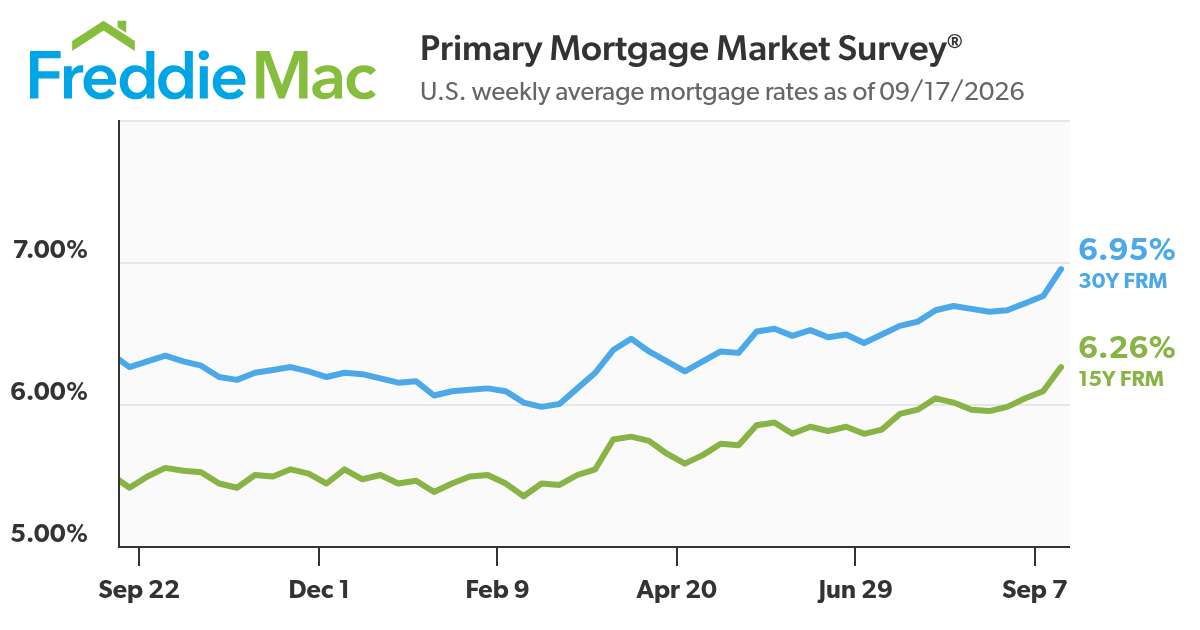
The 30-year fixed-rate mortgage averaged 6.95% as of September 17, 2026, up from last week when it averaged 6.76%. A year ago at this time, the 30-year FRM averaged 6.26%.
The 15-year fixed-rate mortgage averaged 6.26%, up from last week when it averaged 6.09%. A year ago at this time, the 15-year FRM averaged 5.41%.