For some Florida homeowners, the question is not just whether they can sell for a strong price. It is what that sale could mean at tax time. 17.9% of Florida owner-occupied households are currently estimated to have home sale gains above the federal capital gains exclusion thresholds. The current exclusion allows single filers to exclude up to $250,000 in capital gains from the sale of a primary residence, while married couples filing jointly can exclude up to $500,000, if they meet ownership and occupancy rules. Those limits have not changed since 1997, even as home values have climbed. The tax is based on gain, not sale price, and homeowners may be able to factor in the original purchase price, qualifying improvements and certain selling costs. Longtime home owners, empty nesters, single filers and homeowners who bought before major price gains may need to think about the issue.
NAR is backing the More Homes on the Market Act, which would double the current exclusion and index it to inflation.
Key Provisions of H.R. 1340 / S. 3332:
The legislation addresses the “lock-in” effect of the current tax code, which has remained unchanged since 1997. It proposes the following updates:
Higher Exclusions: Doubles the capital gains tax exclusion for home sales . Single filers could exclude up to $500,000 (up from $250,000), and married couples filing jointly could exclude up to $1,000,000 (up from $500,000).
Inflation Indexing: Implements an annual inflation adjustment to the exclusion amounts to ensure they keep pace with the cost of living.
My Take: The standard solution to America’s housing shortage is to build more houses. But in densely populated areas like Pinellas County, there is no land to build a substantial number of new homes to meet demand. If passed, this bill could unlock thousands of houses that are already built. Many existing long-time homeowners would like to downsize or make a move but are staying put because selling would trigger major tax consequences. Source: NAR
Mortgage Rates
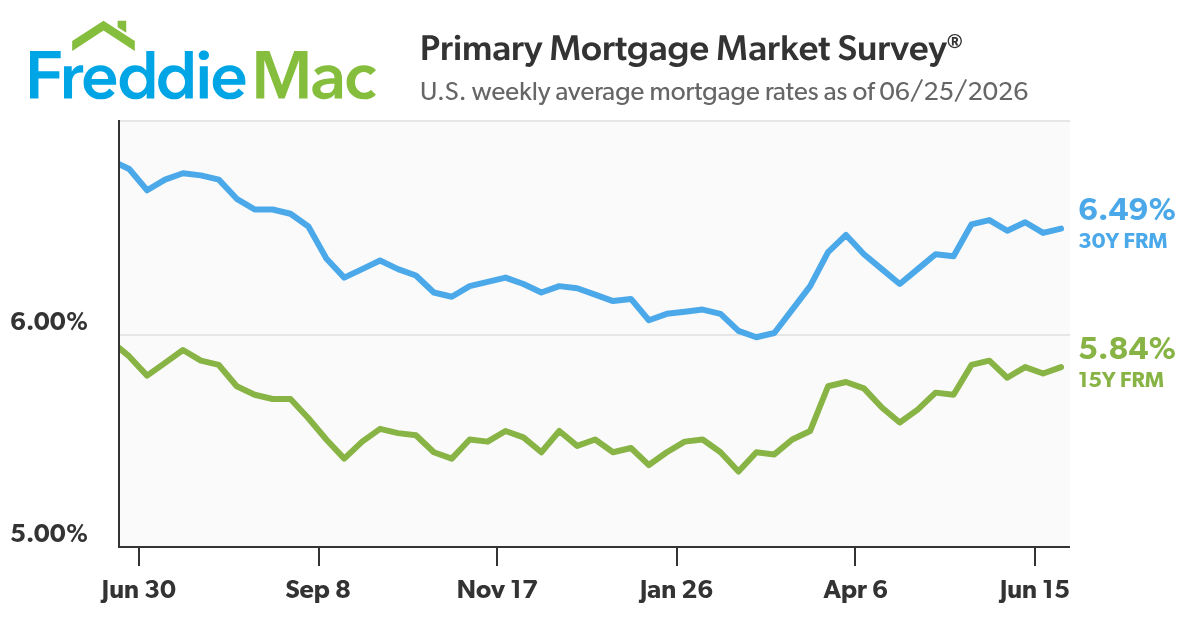
Average 6.49%
The average 30-year fixed mortgage rate was little changed this week at 6.49%. Rates have remained relatively stable over the last six weeks. Meanwhile, purchase activity eased modestly and refinance activity has continued to pick up recently, reflecting borrowers’ responsiveness to current rate levels.
The 30-year fixed-rate mortgage averaged 6.49% as of June 25, 2026, up from last week when it averaged 6.47%. A year ago at this time, the 30-year FRM averaged 6.77%.
The 15-year fixed-rate mortgage averaged 5.84%, up from last week when it averaged 5.81%. A year ago at this time, the 15-year FRM averaged 5.89%.