U.S. housing demand and listings are rising year over year, but metro absorption rates are diverging. Faster Northeast markets favor sellers, while slower Florida and Texas metros are seeing rising supply and growing buyer leverage.
Metro-level differences in market speed are widening. That shift is beginning to influence leverage heading into peak spring activity.
Absorption measures how quickly inventory is being removed from the market relative to what’s available.
When absorption is elevated, homes clear quickly and sellers retain leverage. When absorption falls and supply builds, timelines stretch and buyers gain negotiating flexibility.
Northeast metros clearing inventory faster
Several Northeast metro areas are posting absorption rates near or above 18%. These markets are operating with roughly 1.3 to 1.5 months of supply, reinforcing seller leverage heading into peak spring activity.
Florida and Texas metros show slower turnover
Conditions are markedly different in parts of the Sun Belt, where several Florida and Texas metro areas are operating with 3.9 to 5.0 months of supply.
Source: HousingWire
Mortgage Rates
Drop Below 5%
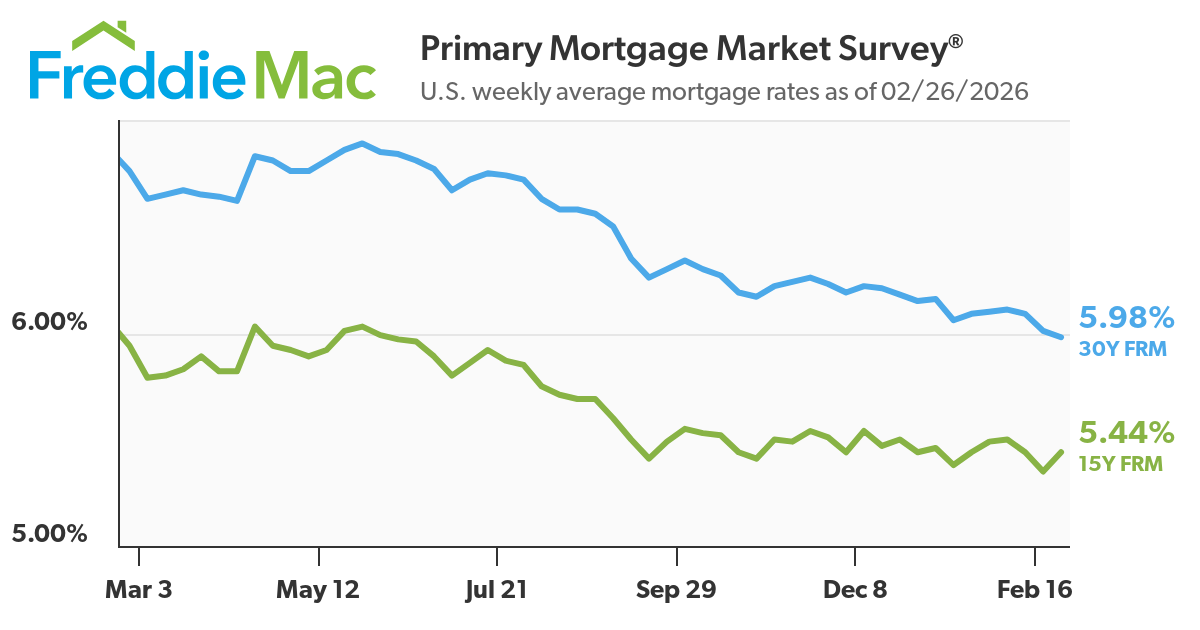
For the first time in three and a half years, the 30-year fixed-rate mortgage dropped into the 5% range, falling even lower than last week’s milestone. This rate, combined with the improving availability of homes for sale, is meaningful and will drive more potential buyers into the market for spring homebuying season.
The 30-year fixed-rate mortgage averaged 5.98% as of February 26, 2026, down from last week when it averaged 6.01%. A year ago at this time, the 30-year FRM averaged 6.76%.
The 15-year fixed-rate mortgage averaged 5.44%, up from last week when it averaged 5.35%. A year ago at this time, the 15-year FRM averaged 5.94%.