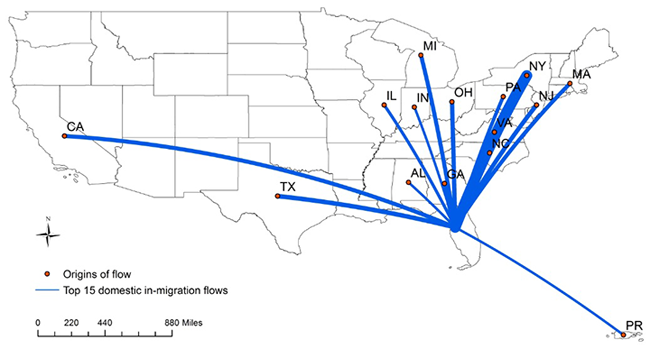
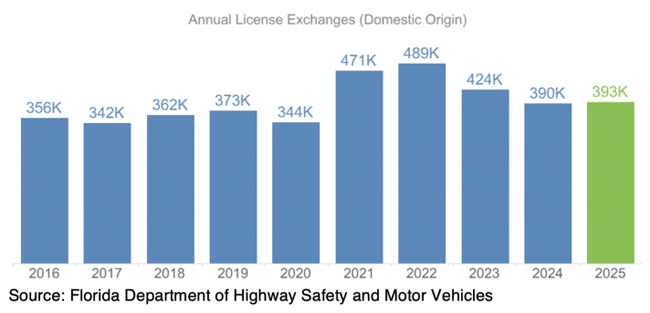
Florida’s migration has slowed from its pandemic surge, but it hasn’t reversed. More people are still moving in than before 2020, though affordability is reshaping who can make the move, especially younger buyers, families and retirees. Data from the Florida Department of Highway Safety and Motor Vehicles and the U.S. Census Bureau show migration has cooled since peaking in 2022. In 2025, about 393,000 driver’s license exchanges were recorded, down from the peak but still above the pre-pandemic average of roughly 358,000.
Demand is still there, but affordability is deciding who can buy. Younger buyers and families are facing higher barriers to entry. Retirees continue to drive activity, but rising insurance, taxes and condo costs could influence location choices and timing.
Florida’s economy is maturing, bringing a wider new employment opportunities in various industries for different ages and skill and education levels. Growth is coupled with higher insurance rates, special assessments and increased condo regulation. Bottom line: people still like living near the beach.
Source: Florida Department of Highway Safety and Motor Vehicles and the U.S. Census Bureau
My Take:Florida’s economy is maturing, bringing new employment opportunities in various industries for different ages and skill and education levels. Growth is coupled with higher insurance rates, special assessments and increased condo regulation.
Bottom line: people still like living near the beach.
Mortgage Rates
Inch Down
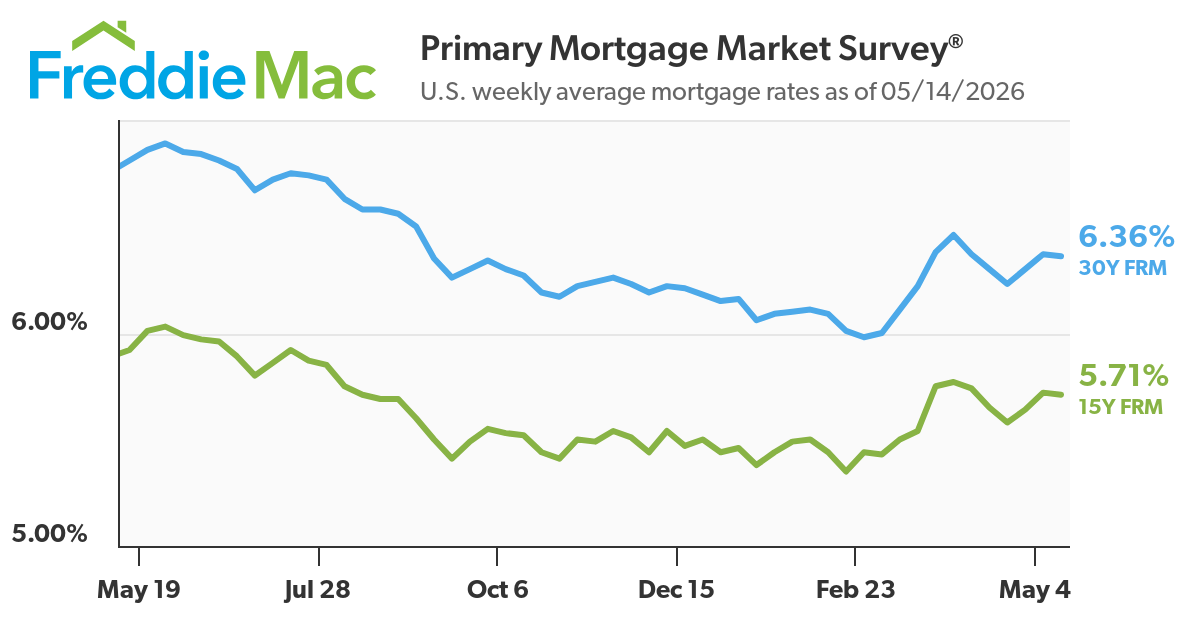
Mortgage rates ticked down this week, averaging 6.36%. While purchase demand is softening, it remains above this time last year. Recent data also shows existing-home sales modestly edging up.
The 30-year fixed-rate mortgage averaged 6.36% as of May 14, 2026, slightly down from last week when it averaged 6.37%. A year ago at this time, the 30-year FRM averaged 6.81%.
The 15-year fixed-rate mortgage averaged 5.71%, slightly down from last week when it averaged 5.72%. A year ago at this time, the 15-year FRM averaged 5.92%.