Florida is taking legal action against First Street Technology, a company that assigns individual properties climate-risk scores for flooding, extreme heat, wildfires, and wind exposure. These ratings appear on popular real estate websites, including Zillow, Redfin, and Realtor.com.
Florida Attorney General James Uthmeier argues that the scores may be inaccurate or misleading and could discourage buyers, potentially hurting property values. The lawsuit, filed October 23, 2026, also raises concerns about the influence these ratings could have on insurance and real estate transactions.
First Street maintains that its ratings provide valuable information to consumers about potential future climate risks. However, critics question the accuracy of some projections and whether a single numerical score adequately reflects the actual characteristics of an individual property.
My Take: There is an important distinction between providing meaningful, property-specific information and assigning a numerical risk score that could negatively influence a buyer’s perception without sufficient context. In our coastal condominium market, buyers are better served by evaluating the actual property and building, including their specific conditions and characteristics, rather than placing too much weight on a generalized, computer-generated risk rating.
Mortgage Rates
Decline for Third Week
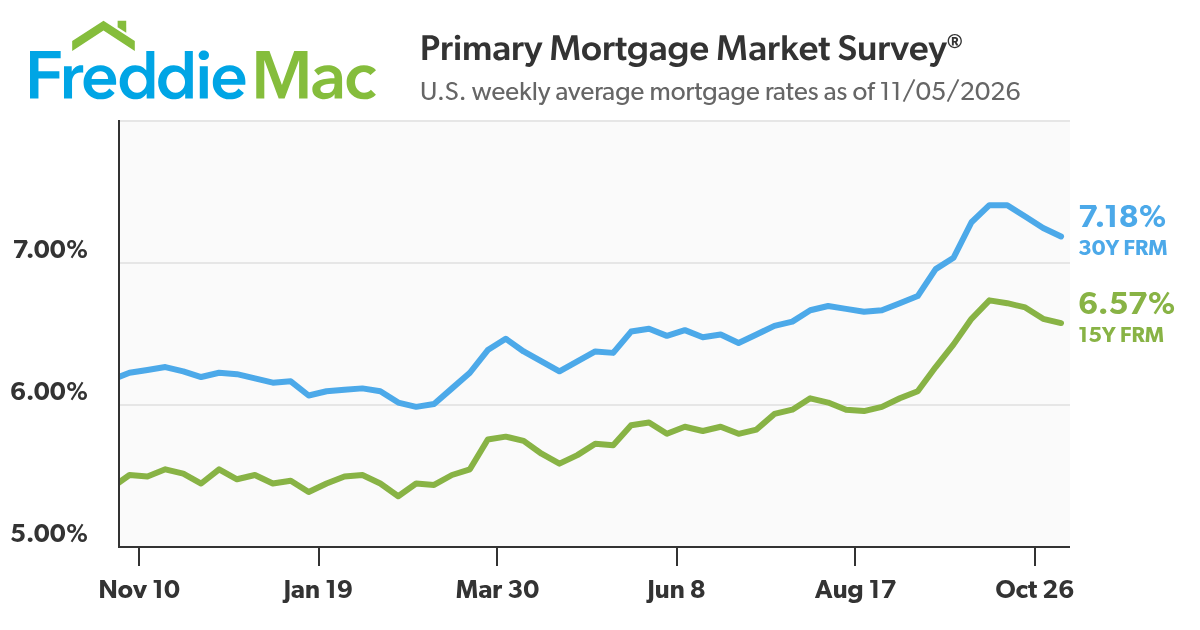
Mortgage rates continued their downward trajectory this week, improving the environment for prospective homebuyers against a backdrop of strong economic growth.
The 30-year fixed-rate mortgage averaged 7.18% as of November 5, 2026, down from last week when it averaged 7.24%. A year ago at this time, the 30-year FRM averaged 6.22%.
The 15-year fixed-rate mortgage averaged 6.57%, down from last week when it averaged 6.60%. A year ago at this time, the 15-year FRM averaged 5.50%.